
Searching Appling County Civil Dockets
Know your court first. The Georgia E-Access directory points Appling Superior and State users to PeachCourt. PeachCourt requires an account. Divorce, domestic, equity, and title cases sit in Superior Court, along with other exclusive or general-jurisdiction matters. State Court covers broad civil authority outside those reserved areas. Magistrate and Probate keep their own custodians. Pull the exact case number from a summons, notice, or clerk letter. Appling publishes no official case-number codebook. A name-only docket search can miss a record. Spelling, former names, account limits, and the wrong court all play a part.
- Classify the matter as Superior, State, Magistrate, or Probate.
- For Superior or State, select Appling in the official directory and enter PeachCourt.
- Sign in and use the narrowest stable identifier available.
- Read the header, then the filing and event history in date order.
- Contact the custodian when the record, image, or current setting is absent.
Appling Civil Courts Compared
Civil does not name one Appling County court. Superior Court takes divorce and domestic cases, equity and title matters. It also keeps everything in its exclusive power. State Court hears general civil matters not reserved to Superior. Magistrate handles claims up to $15,000, plus dispossessory actions and garnishments. Probate Court keeps the estates and guardianships.
| Matter | Custodian | Search path |
|---|---|---|
| Divorce, title, equity, major civil | Clerk of Courts | Superior via PeachCourt or clerk |
| General civil | Clerk of Courts | State via PeachCourt or clerk |
| Claim up to $15,000, dispossessory | Magistrate Court | Separate request, (912) 367-8117 |
| Estate or guardianship | Probate Court | Separate request, (912) 367-8114/8115 |
Venue turns on jurisdiction, not dollars, because some subjects belong to Superior Court alone.
Inside an Appling County Civil Docket
A civil docket is the chronological index behind an Appling County lawsuit. Fields may show court, county, number, filing date, case style, category, status, judge, party roles, counsel, settings, disposition, document indicators, and costs. The events usually run from complaint or petition through service, answer, motions, hearing notices, orders, trial, judgment, dismissal, post-judgment collection, and appeal.
| Case header | Court, exact case number, style, type, filing date, and status. |
|---|---|
| Parties | Plaintiff, defendant, petitioner, respondent, and public counsel data. |
| Service | Issuance and return entries showing process activity. |
| Filings | Complaint, answer, motion, response, notice, and order entries. |
| Settings | Hearing date, time, type, courtroom, judge, and resets where shown. |
| Outcome | Dismissal, judgment, transfer, appeal, or satisfaction. |
A line that reads "order filed" tells you nothing about the terms inside. Pull the image or a clerk copy before you rely on the result.
Appling Service and Answer Timeline
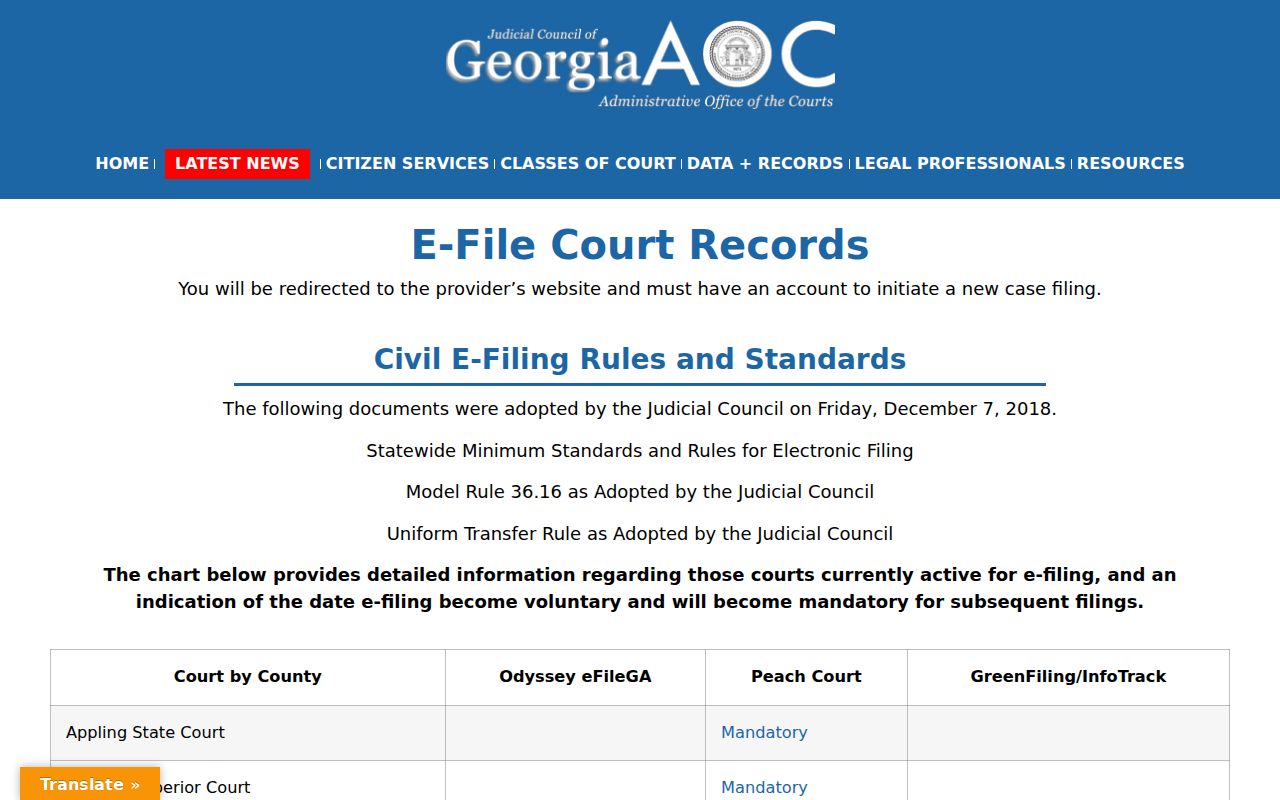
Every civil case opens with a complaint or petition and a clerk-assigned number. Summons and service entries follow. Appling publishes a $50 sheriff service charge when a party requests that service. That fee is not a copy fee. Next may come an answer, a default-stage entry, a motion, or a response. A filed motion is only a request for the court to act. It is not proof that relief was granted. The Georgia court e-filing chart lists PeachCourt as mandatory for Appling Superior and State civil e-filing.
E-filed entries feed the clerk-maintained record, but the vendor never replaces the Appling County Clerk as legal custodian. After answer and motion practice, the docket may show a hearing, continuance, trial, judgment, dismissal, writ, garnishment, satisfaction, or appeal. Read each later entry, since the newest event can change an earlier status.
Civil Case Types on the Docket
Appling County civil dockets span many claims and remedies. Superior records can include divorce, domestic relations, title, equity, and major civil litigation. State Court records cover civil disputes not assigned exclusively elsewhere. Magistrate records hold small claims within the $15,000 cap. They also cover dispossessory cases about possession and garnishments. Probate records concern wills, estates, guardianships, and statutory probate work.
| Case type | Typical docket events | Appling court |
|---|---|---|
| General lawsuit | Complaint, service, answer, motion, order, judgment | Superior or State |
| Divorce/domestic | Petition, service, hearings, orders, judgment | Superior |
| Small claim | Statement of claim, service, hearing, judgment | Magistrate |
| Dispossessory/garnishment | Filing, service, response, hearing, writ or judgment | Magistrate |
| Estate/guardianship | Petition, notice, hearing, order | Probate |
A Magistrate or Probate case missing from PeachCourt is a routing gap. It does not prove the matter never existed.
Appling Filing and Service Costs
The official Appling County Clerk fee schedule lists a $219 filing charge for civil and divorce filings. It also posts a $50 sheriff service charge. Those figures cover starting and serving a case. They say nothing about a docket sheet, an ordinary copy, a certified copy. Nor do they cover an online document image. The Appling filing-fee schedule is the primary source for those local amounts.
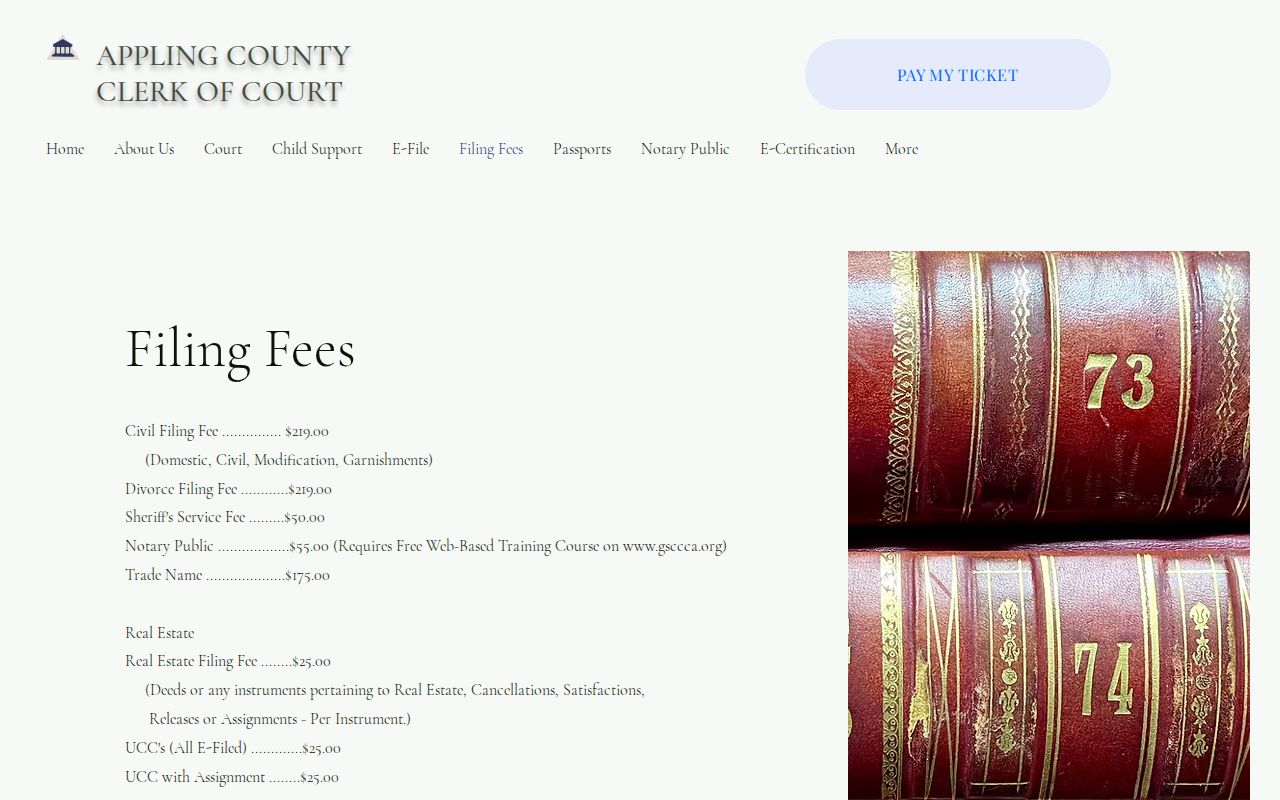
The schedule frames filing costs well, but copy prices need a current quote from the custodian.
Keep fees distinct. The $219 filing fee and $50 sheriff service fee must never be presented as civil docket copy prices.
For an actual order, note its title and filing date, then request a plain or certified copy. Say whether you want delivery by mail or electronic certification. Ask for the total before you pay.
Civil Docket Settings and Hearings
A civil setting can take many forms. It might be a motion hearing, calendar call, pretrial event, bench trial, jury trial, or another proceeding the judge fixes. The docket may list date, time, setting type, judge, location, and reset history. The most recent notice and direct clerk confirmation control over any old setting. Appling offers no standalone public calendar portal. For Superior or State cases, inspect the latest PeachCourt notice or setting, then call the Clerk at (912) 367-8126 when your appearance matters. For Magistrate, call (912) 367-8117. For Probate, call (912) 367-8114 or (912) 367-8115. On court day, check the posted calendar and follow check-in instructions. A continuance moves a setting. It does not dismiss the case. Emergency judicial orders can also shift dates and deadlines. Treat the body of the civil docket as history, never as a promise that every old date still stands.
Missing Appling Small Claims Online
A small claim, dispossessory, or garnishment can be missing from Superior or State results. When that happens, go straight to Appling Magistrate Court. The office sits at 77 Tippins Street, Baxley, Georgia 31513, and answers at (912) 367-8117. Give staff the party style, the rough filing date, and any case number printed on your service papers. Before ordering a copy, ask whether the file is active, archived, or sitting with another court.
One caution about PeachCourt. Widening a name search there does not pull in Magistrate records. The verified directory covers only Appling Superior and State. Ask Magistrate staff how to inspect the docket or get a copy. Staff can also confirm a current hearing or retrieve an older file. The court posts no official local filing fee. Request a current quote rather than assuming the Superior or State amount applies.
Court class matters most here. An estate or guardianship belongs to Probate Court at 36 South Main Street. Match the case to the right tribunal. Your Appling County civil docket search then comes together.
Civil Docket Access Rules
Appling County civil dockets are public under court access procedures. Still, expect limits around protected identifiers, sealed filings, and sensitive case categories. Georgia's Attorney General draws a clear line. Superior, State, Probate, and Magistrate Courts do not follow the ordinary agency Open Records Act process. A file can be public yet handled by its court custodian. The Attorney General court-record access explanation lays out that distinction.
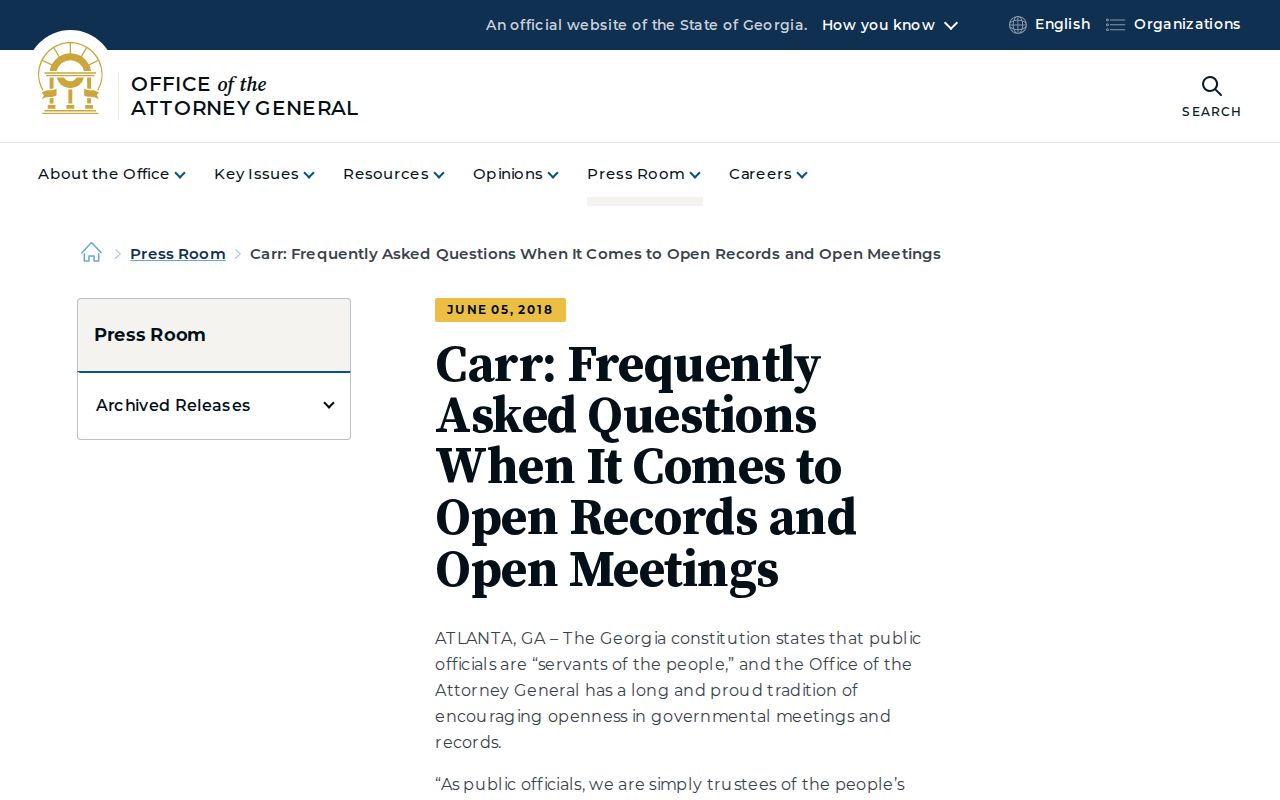
That rule shapes how you ask. A civil file request should name the specific court, case, and document. A generic agency request will not do.
Access limit: O.C.G.A. §9-11-7.1 and Georgia court rules protect personal identifiers and provide sealing procedures. Public copies may be redacted, while sealed material requires authority.
Appling Judgments and Later Events
A civil docket does not always end at judgment. Entries afterward can reflect a voluntary dismissal or nonsuit, dismissal, default judgment, consent order, summary judgment, judgment after trial, transfer, or appeal. Enforcement shows up too. Later lines may record a writ, garnishment, satisfaction, or similar step, so read the exact order, since a short event label cannot show all relief or conditions.
- Default judgment
- A judgment entered after the legal prerequisites for default are met.
- Nonsuit
- A claimant ends a claim subject to Georgia procedure.
- Judgment
- The court's adjudication of relief or outcome.
- Satisfaction
- An entry tied to fulfillment of a judgment obligation.
- Notice of appeal
- A filing that begins review in another court.
A transfer or appeal splits the record. The original Appling County civil docket keeps the transfer or appeal entry, and the receiving court starts its own event history, so search there as well. For a wider search by name or number, try the Appling County case lookup.