
Searching the Surrency Court Docket
Figure out jurisdiction first. A broad name search can send you to the wrong court entirely. Look at the issuing court printed on any Surrency citation, summons, bond paperwork, or notice. If it says Surrency Municipal Court, call the contact number on that paper. Cross-check it against the official county directory. Then ask the Surrency clerk concrete questions. Confirm the citation or case number, the current hearing date, and whether you must appear in person. Ask whether payment resolves the matter. Request instructions for a copy of any Surrency public record.
- Copy the Surrency court name and citation or case number exactly from the newest paper.
- Verify Surrency's current clerk contact through the citation and official government directory.
- Ask for the current Surrency date, time, location, charge or ordinance description, and case status.
- Confirm Surrency payment or record-copy instructions before sending money or traveling.
A name alone may not be enough. It can be incomplete, or it can match several people. Surrency publishes no official list of search fields, no public refresh schedule, and no confirmed case-number format. So treat a thin web result with care. A failed search never proves a case is absent. No vendor should be assumed to hold the Surrency docket.
No Verified Surrency Docket Portal
Surrency Municipal Court is real. Official material names it plainly. But the court publishes no reliable public docket portal or current web page. That gap changes how you get records. The citation and the Surrency clerk come first; no database replaces either. Treat any vendor as unofficial until the city confirms it currently uses that service.
Quick answer. Use the Surrency citation and official directory to verify Surrency's current clerk, address, phone, hours, vendor, and calendar before relying on any search result.
Georgia Courts says the state has no centralized traffic-citation database. Vendors vary by court, and a payment screen is not the whole Surrency docket. If a vendor search comes back empty, double-check the Surrency jurisdiction and the number, remember a fresh citation may take time to post, and call the court. Graham has its own documented portal and procedures. None of that applies to Surrency.
Surrency Municipal Court Basics
Surrency Municipal Court hears municipal ordinance matters and eligible traffic cases within its lawful authority. The municipal clerk keeps that city docket. That role is separate from the elected Appling County Clerk of Courts, who maintains Superior, State, and Juvenile files, and from the Magistrate and Probate clerks as well. The city publishes no verified court address, phone number, office hours, judge or clerk name, fine schedule, deferred option, caseload count, recording-retention period, or current vendor. Check those details rather than borrowing them from another municipality. The official county department and city directories help, but the citation itself remains the best routing document for a specific case. The Appling County court and department directory lists the offices and courts that serve the county.
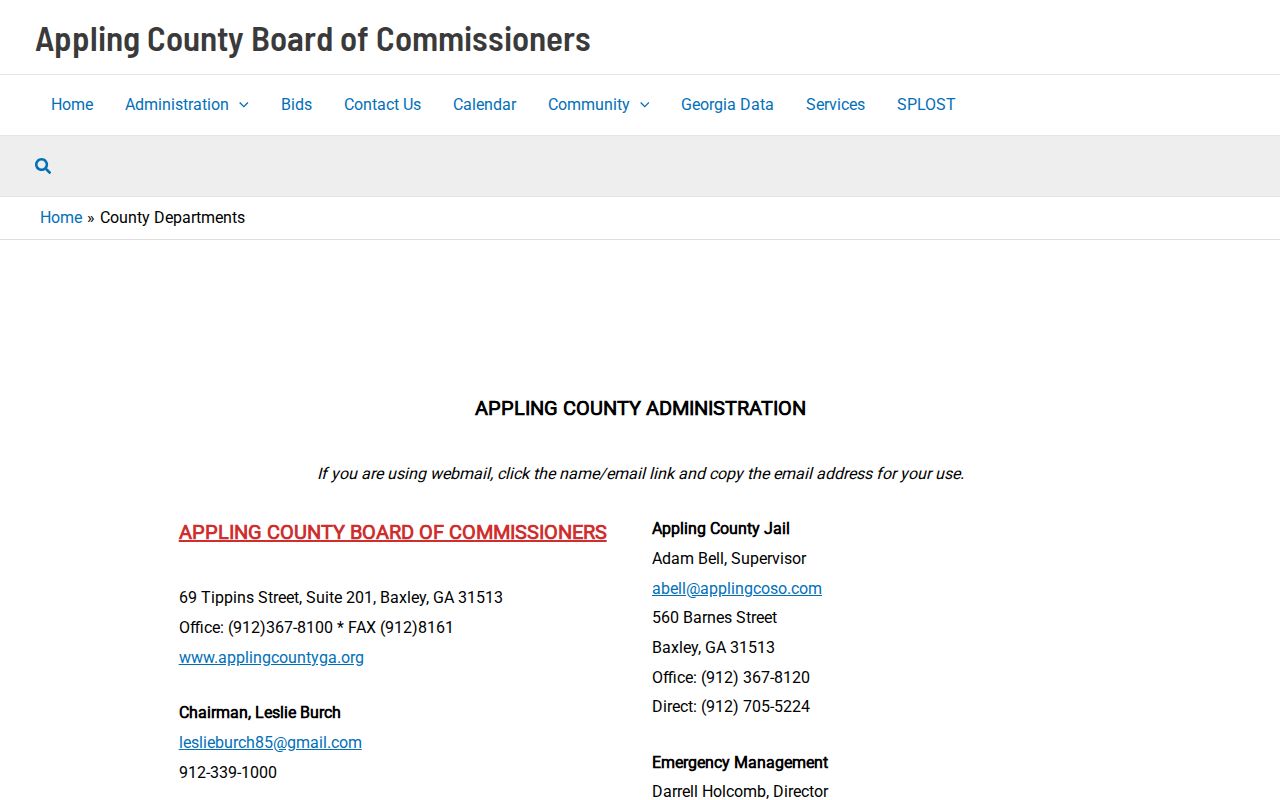
The directory view keeps county offices distinct from Surrency's municipal custodian. That distinction matters. A city citation routed straight to the Superior and State clerk will sit in the wrong office.
Surrency Docket Citation Checklist
A citation carries details a thin public web presence lacks. Put the paper in front of you before you call. Copy its identifiers exactly as printed. Ask the clerk to repeat the current facts back to you, so a transposed digit or a similar name does not pull the wrong matter from the docket.
| Item to confirm | Why it matters |
|---|---|
| Issuing jurisdiction | Separates Surrency from Baxley, Graham, Appling State Court, or another court. |
| Citation or case number | Provides the narrowest identifier; no universal Surrency format is published. |
| Name and date of birth | May help a clerk or current vendor distinguish similar records. |
| Current setting | Confirms date, time, court location, and whether a reset occurred. |
| Mandatory appearance | Determines whether payment alone is even an available path. |
| Payment eligibility | Must come from the court; no official Surrency fine schedule was found. |
| Copy channel | Identifies how to obtain the docket, disposition, or certified item. |
Georgia's traffic guidance says online availability can take 7 to 21 business days. If your court date has passed, call instead of waiting on a portal. Signing a citation acknowledges receipt and a duty to respond. That signature is not an admission of guilt.
Court Dates and Settings in Surrency
Surrency publishes no standalone calendar. Start with the newest citation or notice, then confirm with the municipal clerk. An older date can linger in the docket history after a continuance. So the most recent setting or judicial order is what controls. A payment vendor cannot continue a case or pull it off a calendar. Only the court can.
| Court | Confirm that the notice says Surrency Municipal Court rather than another Appling court. |
|---|---|
| Date and time | Use the latest setting and ask whether the time is a check-in or individual hearing time. |
| Case or citation number | Links the calendar information to the correct city docket. |
| Setting type | May identify arraignment, plea, hearing, trial, or another municipal event. |
| Location | Verify the current address and room directly before travel. |
| Status | Ask whether the setting is current, reset, continued, or cancelled. |
After a weather or judicial emergency, check Georgia's official emergency-order archive, then call the court. A general order can affect access or deadlines, but it will not answer every case-specific calendar question. On appearance day, follow the court's check-in and security instructions exactly.
Surrency Docket and PeachCourt
PeachCourt is not the default search for Surrency Municipal Court. Georgia Courts E-Access sends Appling Superior and Appling State cases to PeachCourt. An account is required. Municipal dockets stay with their city custodians. So a Surrency citation typed into an Appling Superior or State search may return nothing useful. Use PeachCourt once the case has reached a covered county court. Or use it when a notice names Appling Superior or State Court. Within authorized access, search the exact county case number first. Then verify the court, caption, filing date, status, and newest events. A docket line and the filed document image are different things. When an image is unavailable, request it from the custodian. The countywide Appling County case lookup lays out the full PeachCourt and clerk fallback sequence. At city-page depth the split is simple. Surrency records begin with Surrency. An Appling State or Superior number begins a county search.
Traffic Tickets in Surrency
Start with the court name printed on your citation. A city-issued eligible ticket can stay on the Surrency Municipal Court docket. Appling State Court takes county misdemeanor and traffic matters, while felonies belong to Superior Court. The agency that wrote the ticket does not settle every custody question. So let the printed court name guide you.
Never assume a citation can simply be paid before court. Ask whether appearance is mandatory. Ask which payment channels the court accepts, the exact amount, the deadline, and whether added costs have posted. Surrency publishes no official bond or fine schedule. No deferred-disposition or course fee is set. Guessing from another city risks a missed deadline or a wrong payment.
When a search fails. Recheck the issuing court and citation number, then contact Surrency rather than cycling through unverified vendors.
If the appearance date has passed, call the court promptly and ask for current status. Consequences vary with the court and the case. Only a judge can change a required setting, and trying to pay online does not mean the court excused the appearance.
Surrency Traffic Docket Boundaries
A Surrency court file and a Georgia driving record are separate records. They are kept by different offices. The municipal file can show the citation, plea, court setting, disposition, assessed costs, and payments. Once the court reports the outcome through Georgia's reporting system, the Department of Driver Services maintains the state driving record. A DDS entry is not the municipal docket. It will not give you the filings or hearing history.
| Surrency court record | DDS driving record |
|---|---|
| Held by the municipal court clerk | Held by the Georgia Department of Driver Services |
| Tracks citation, settings, plea, disposition, and court costs | Reflects state driver-history information after court reporting |
| Requested from Surrency through verified city channels | Requested under DDS procedures |
A payment site is narrower still. It may show a balance or take money without displaying the full case chronology. For proof of what the court decided, ask Surrency for the docket or disposition, and say whether you need an ordinary or certified copy.
Where Surrency Cases Go
Municipal ordinance and eligible traffic matters usually stay with Surrency unless law or court action moves them for transfer, review, or another proceeding. State Court handles Appling County misdemeanors, county traffic matters, and general civil cases not assigned elsewhere by law. Superior Court holds the felonies, domestic matters, title and equity cases, and other general-jurisdiction work.
A transferred or reviewed case can leave records in more than one court. Keep the Surrency citation number. Then get the receiving court's case number and search both histories. The city docket may show the initiating event or transfer. The county docket carries the later settings and disposition. A missing city result after transfer does not mean the county matter ended.
Appling Magistrate Court stays separate. It covers claims up to $15,000, dispossessory and garnishment matters, warrants, and preliminary functions. Probate Court keeps estates and guardianships on its own track. Court class, not a generic "county case" label, tells you which clerk can answer the request.
Surrency Docket Population Context
Surrency is Appling County's smallest incorporated place. The 2020 Census PL data counts 201 residents. That figure is civic context, not a municipal court caseload, and it should never be turned into a filing estimate. The court publishes no annual Surrency docket total. The 2020 Census incorporated-place API supplies the count behind that page.
The population figure anchors Surrency's place in the county's city profile. It leaves court volume unclaimed. An official court report must supply it. Small size does not fold Surrency's municipal custody into Appling County's clerk system. Every filed city matter still needs its citation, case number, setting, and disposition checked with the proper office. County population counts and circuit judge counts are no substitute for Surrency case statistics.
Surrency Court Record Access Rules
Ask the municipal clerk for the public docket, disposition, or named filed item. Give the court and case or citation number. Say whether you need a plain or certified copy. Request the current fee and turnaround, and confirm delivery and payment methods. Surrency sets out no public copy price, retention rule, or public terminal. The clerk must supply those details.
Know what you are asking for. A docket is the chronological index of filings, court actions, settings, and outcomes. A document is the actual citation, order, or other item named by an entry. A certified copy carries clerk authentication, while a screen image or payment receipt does not. Protected identifiers should be redacted. Sealed material cannot be obtained through an ordinary public request.
Georgia's Attorney General treats court files differently from the ordinary Georgia Open Records Act procedure. Public court access follows the court's own process. If a record is withheld, ask what rule, order, identification, authorization, or motion applies. Do not try to slip past a lawful restriction through another portal.
Verify Surrency Docket Details
Details like the Surrency court address, office hours, and clerk phone number change often. The city does have a municipal court. But treat any listing of its fine schedule, judge, payment options, or deferred program as something to confirm. Do not trust it. Call the clerk before you travel.
When you reach the court, have the citation number handy. Give the party name, the scheduled date, and the issuing agency too. Ask if staff can confirm the next hearing date and case status by phone. Ask whether a counter visit needs an appointment. Find out what payment or ID the office accepts. A Surrency case can also move up to Appling State or Superior Court. If yours did, call the Clerk of Courts at (912) 367-8126. Use the receiving court's case number.
Working through the clerk this way is not a second-best option. With no online docket to lean on, the citation, the municipal clerk, and the receiving court form a traceable chain for any Surrency docket search. That chain gets you the real court record. It skips guessing at details the city has not settled.