
Appling County Court Calendars Explained
Appling County posts no single calendar portal that covers every local court. That is the first thing to know. Start instead with whatever paper you already hold. A notice, summons, bond paperwork, or citation usually carries the freshest date. If your case sits in Superior Court or State Court, PeachCourt lets you check settings inside the case record itself. The assigned judge sets the calendar. The Appling County Clerk of Courts records the notices and orders behind it. Magistrate, Probate, Juvenile, and municipal matters each run through their own offices. That covers Baxley, Graham, and Surrency as well.
Keep the calendar and the docket straight in your head. A calendar shows when and where a matter is expected to be called. It usually lists the case number, judge, and type of setting. The docket keeps the longer chronology, including earlier settings that were continued. So a date buried in that history is not automatically the date you must appear. Trust the newest order or notice first, then confirm directly with the court.
Appling County Setting Confirmation Chain
The safest Appling County calendar check runs through several official channels, taken in order, because no single online screen covers all the local trial courts.
- Read the latest notice, citation, summons, or bond paper and identify the exact court and address.
- For Superior or State Court, open the Georgia Courts E-Access directory, select Appling, and follow its PeachCourt link.
- Call the responsible clerk with the case number and ask for the current date, time, setting type, and location.
- On appearance day, examine the posted courtroom calendar and follow check-in directions.
For Superior and State Court settings, the Clerk of Courts is the place to start. Call (912) 367-8126 or visit 69 Tippins Street, Suite 103, in Baxley. Magistrate Court answers at (912) 367-8117. Probate Court uses (912) 367-8114 or 367-8115. Graham Municipal Court can be reached at (912) 367-2202. Your attorney, if you have one, is another direct line to a setting. Mail sent to P.O. Box 269 and faxes to (912) 367-8180 work for records requests. Neither fits a date you need confirmed fast.
Finding Your Court Date
Start with the court name, not just the words "Appling County." Superior Court takes felonies, domestic cases, title or equity disputes, and major civil matters. State Court handles misdemeanors, county traffic cases, and general civil work. That work sits outside Superior Court's exclusive reach. Magistrate Court covers claims up to $15,000. It also handles dispossessory and garnishment matters, warrants, and preliminary proceedings. Probate and municipal calendars sit on separate tracks entirely.
For Superior or State Court cases, PeachCourt Account Access requires an account first. Search by case number when you can. Open the summary and find the latest notice or setting. If what you see online clashes with a newer paper notice, call the clerk rather than guessing. Older files may still need a trip to the counter. The Appling County case lookup walks through how to pin down the right file. Read its setting after that. On the day itself, the posted calendar is the last word.
Appling County Setting Types
Each entry on an Appling County docket carries a label describing what the court plans to do on that date. Treat it as a plan, not a guarantee. A trial listed for a certain morning can move, reset, or resolve beforehand, so the label tells you the type of setting only.
- Calendar call
- The court checks readiness and decides which matters will proceed.
- Motion hearing
- The judge hears argument or evidence on a specific filed request.
- Arraignment
- A criminal charge is formally addressed and a plea may be entered.
- Pretrial
- The court addresses motions, discovery, readiness, or resolution before trial.
- Sentencing
- The court enters punishment or another order after conviction or plea.
- Dispossessory hearing
- A Magistrate setting about possession of premises, outside PeachCourt's Superior and State route.
Appling County hearings come in several forms, and each serves a different purpose. Bench trials, jury trials, pleas, first appearances, commitment hearings, and probate hearings all appear on calendars here. Each follows its own procedure. When a short label leaves you unsure, ask the clerk about attendance and check-in. Staff will explain administrative facts. They cannot offer legal advice.
How to Read a Court Setting
A good setting line ties the calendar entry to the right case and courtroom. Match the case number, the judge, and the room against the newest notice you received, since schedules change.
| Court | Superior, State, Magistrate, Probate, Juvenile, or a municipal court. |
|---|---|
| Date and time | The scheduled day and call or check-in time. |
| Case number | The filing court's identifier linking the setting to the docket. |
| Case style | An abbreviated public caption naming the parties. |
| Judge | The assigned or presiding judicial officer. |
| Setting type | Arraignment, motion, calendar call, trial, sentencing, or another event. |
| Location | The building and courtroom to confirm before arrival. |
| Status | Current, continued, cancelled, or reset, when displayed. |
Public listings do not always show every field. Names may appear abbreviated, and juvenile or sealed matters may be left off entirely. Details sent to the parties in a filed notice can also be missing from a posted list, so rely on the official notice for the full picture.
Appling County Emergency Calendar Changes
A hurricane can upend a Brunswick Judicial Circuit schedule overnight. Deadlines shift. Courthouse access narrows. In 2024, emergency orders reached Appling County during both Hurricane Debby and Hurricane Helene. Any cached calendar from that stretch may no longer match what a court actually did. A docket entry you saved weeks ago can go stale fast when weather or a judicial emergency changes the plan.
Before you rely on any court date, check the Georgia emergency judicial orders archive for standing orders. Then confirm your case with its court. The Southern District of Georgia page is the official source shown next.
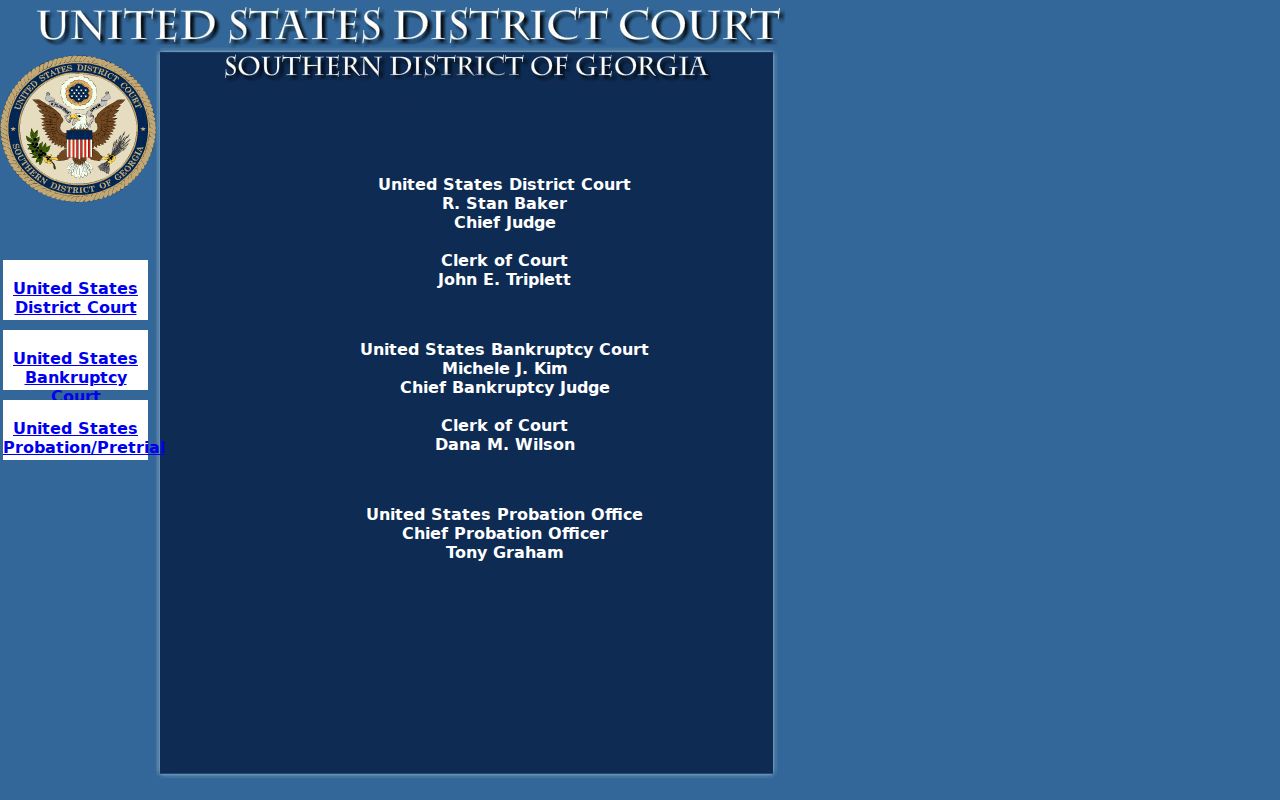
The image also marks a key boundary: federal settings live apart from the local Appling County calendar channels.
Continuances, Resets, and Cancellations
A reset means the court moved the date. The old entry stays on the docket. That can confuse readers. Treat the docket as a timeline and read it in order. A later notice or order will follow the first date. A continuance is not a dismissal, and it does not erase anything.
Only the judge decides whether a case comes off the calendar. Graham Municipal Court spells this out. Call the clerk at least five business days before the hearing if you cannot appear. That call does not postpone anything. A payment vendor has no power to grant a continuance either. Verify any changed setting with the clerk, your counsel, and the newest notice on file.
When an Appling County date seems to move, run a three-record check. Start with the date on your original notice. Compare it against the newest docket event. Next, look for a filed continuance order, an amended notice, or an emergency order. That order should name the affected court and period. Finally, ask the proper clerk whether a replacement setting has been entered. Old dates can linger after the court acts. A broad Brunswick Circuit emergency order may change deadlines without creating a new public calendar page. Keep the court name, case number, and copies of each notice together when you call. Counsel should get the revised setting too. A missing online entry is not proof of a cancellation.
Federal Dates Beyond Appling Calendars
Federal cases tied to Appling County never appear in PeachCourt. Appling sits in the Southern District's Brunswick Division. Bankruptcy goes to the U.S. Bankruptcy Court for the Southern District of Georgia. Appeals land in the Eleventh Circuit. For hearing dates in those matters, the Southern District bankruptcy court publishes its own calendar. It also posts case information there.
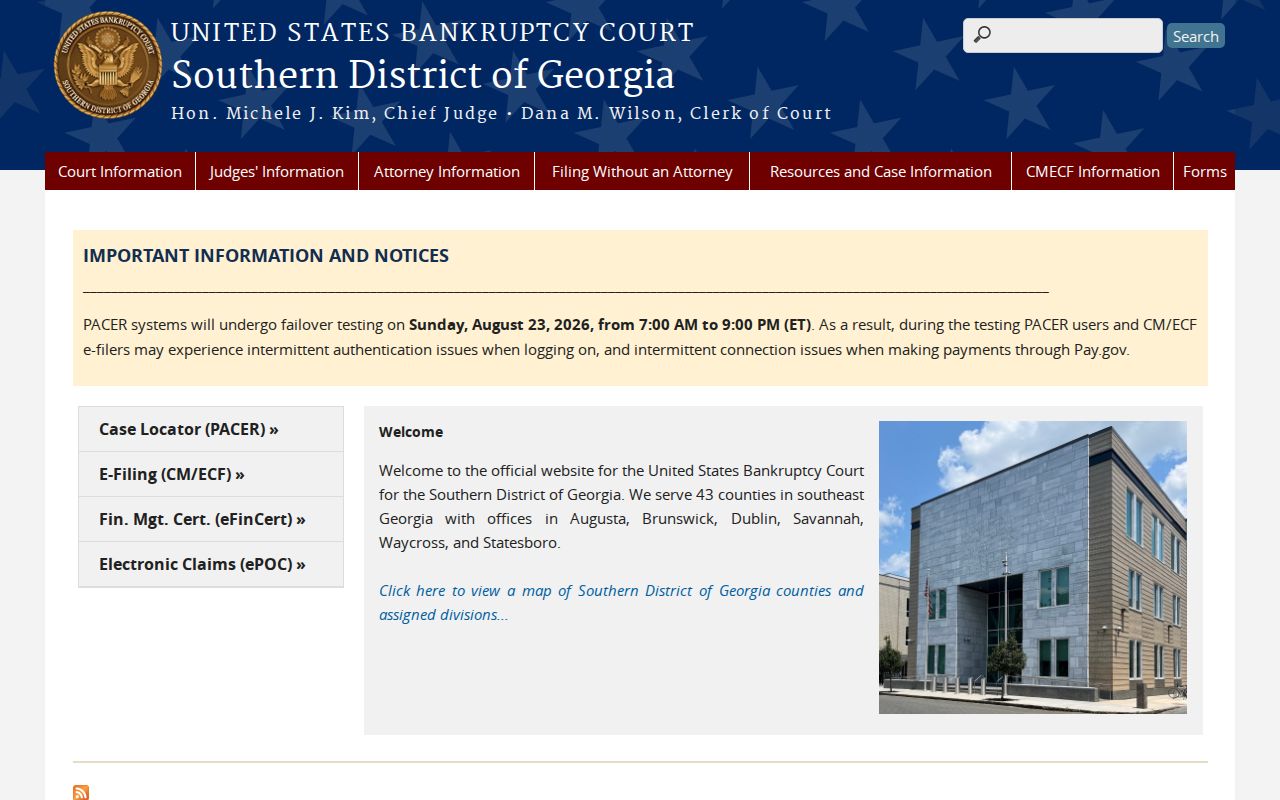
Federal appeals run on a separate gateway. That is why a bankruptcy date never shows up in a county clerk docket search, and the Eleventh Circuit posts the relevant appellate dates on its own site.
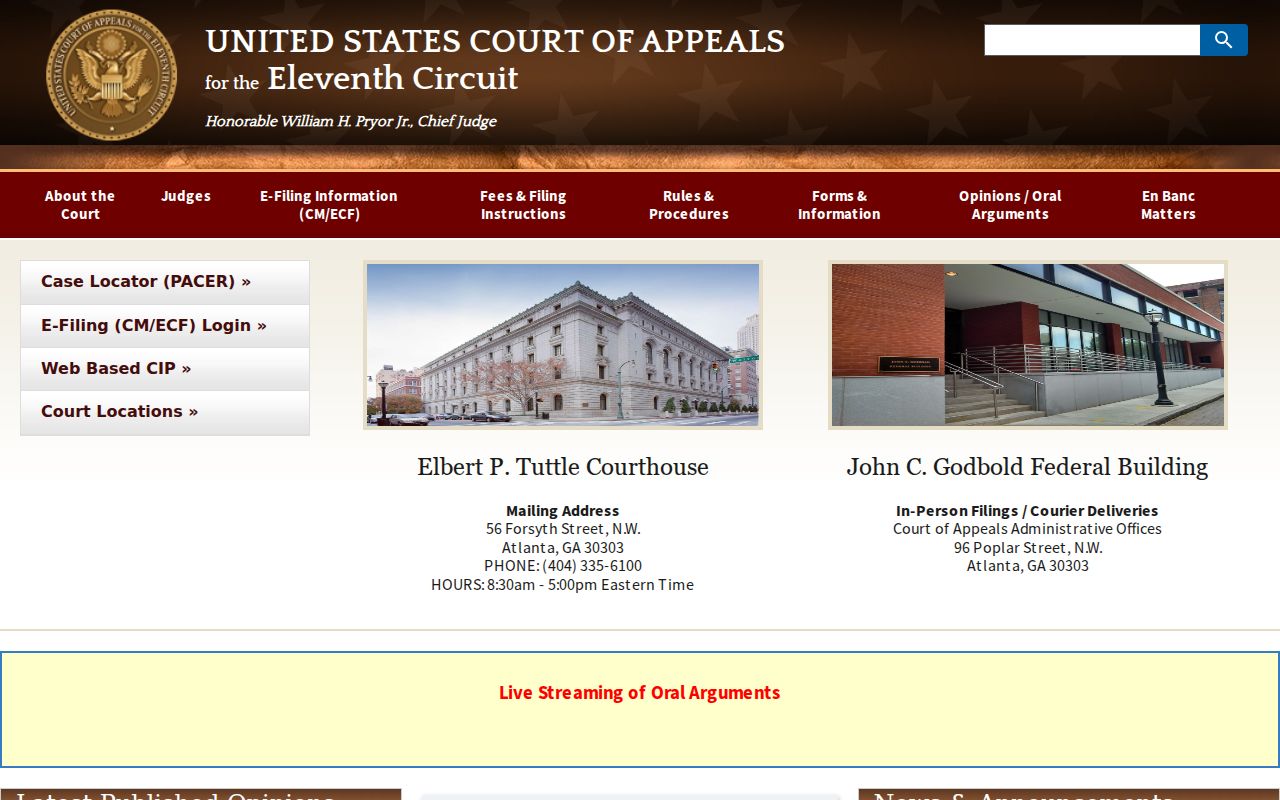
That appellate layer sits outside both the Southern District and the Appling County trial courts.
Appling County Day-of Calendar Check
The posted courtroom calendar is your last practical check. It may show case style, number, judge, and order of call. Still, it does not replace the location and time in the filed notice. Appling County spreads its court functions across several addresses, so confirm the building as well as the room before you leave.
Call ahead when a file is old. Do the same if a setting moved or advance retrieval is needed. The main counter is open weekdays from 8:00 a.m. to 5:00 p.m. The courthouse lists no public terminal bank. Parking validation is not offered. Expect security screening. Device and recording rules come from the judge, so follow those instructions inside the courtroom.
If You Miss a Court Setting
Call the court at once. Tell any attorney too. Provide the case number, court, date, and your contact information, and ask whether a new order or setting exists; paying a balance, leaving a message, or finding no online date does not cure the absence.
Act promptly. A missed Appling County setting can lead to a failure-to-appear entry, warrant, bond consequence, or other court action.
Only the court can explain current status; a licensed attorney can advise what response is appropriate.
Graham warns that missing court can trigger a warrant and a driver's-license suspension. The fallout depends on court and case type. Start Superior or State matters with the Clerk of Courts. For any other court, contact that office directly. Don't assume the county clerk controls its calendar.