
Getting Appling County Court Records
The Appling County Clerk of Courts keeps Superior, State, and Juvenile Court files. Magistrate Court, Probate Court, and each municipal court hold their own records. Start with the court named on the docket or filing. The Georgia Courts E-Access directory routes Appling Superior and State searches to PeachCourt. PeachCourt requires an account, and it does not cover every local court.
When the online record falls short, work the fallback chain. The clerk counter handles inspection and copy requests. Staff can answer process questions by telephone. Fax may work after confirmation. Mailed requests go to the clerk. Older matters may call for paper, archive, or legacy-system retrieval. Georgia open-records procedures do not replace the court custodian's own access rules.
- Identify the court, case number, case style, and filing year.
- Check PeachCourt when the matter is in Superior or State Court.
- Ask the responsible clerk for the exact docket or filed document.
- Choose a plain copy, certified copy, transcript, or hearing recording.
- Obtain the fee and turnaround quote before sending payment.
Appling Court Record Custodians
A blank PeachCourt result does not mean no Appling County court record exists. Superior Court holds felony, major civil, and domestic-relations files. State Court handles misdemeanor, traffic, and general civil matters outside Superior Court's exclusive work. Magistrate Court separately holds claims up to $15,000. It also holds dispossessory and garnishment cases, warrants, and preliminary proceedings. Probate Court keeps estates and guardianships. Meanwhile, the Baxley, Graham, and Surrency clerks hold municipal ordinance and eligible traffic files.
| Record group | Custodian | First access route |
|---|---|---|
| Superior and State | Appling County Clerk of Courts | PeachCourt or clerk |
| Magistrate | Magistrate Court Clerk | Separate court request |
| Probate | Probate Court Clerk | Separate court request |
| Municipal | Issuing city court | City clerk or citation |
| Juvenile | Appling County Clerk of Courts | Access only when authorized |
Appling County Court Record Types
Think of the docket as the chronological index. It lists events but does not always show the text of a filed item. A line saying an order was filed confirms the event, not the order's terms, so request the named document when its language matters. Appling County court records can include the following materials:
- Docket sheets and chronological event histories
- Complaints, petitions, answers, accusations, and indictments
- Motions, responses, notices, and service returns
- Signed orders, judgments, dispositions, and sentences
- Public exhibits, cost entries, and hearing notices
Transcripts come from the official court reporter, not the clerk's image set. Graham Municipal Court hearing recordings are a separate record again. Graham retains those recordings at City Hall for at least two years and provides copies through a request to the Court Clerk.
Appling Court eCertification Requests
Electronic certification is a focused route to an authenticated document. The GSCCCA eCertification portal includes participating Appling Superior, State, and Juvenile courts. Participation does not make a restricted juvenile file public. The requester must still be entitled to the document. Select Appling and pick the correct court. Describe the exact item, enter contact and delivery details, review the calculated charge, and pay online.
Precision matters on the portal screen. A request for "the whole case" gives staff far less direction. A case number plus "final judgment dated" or "certified docket sheet" works better.
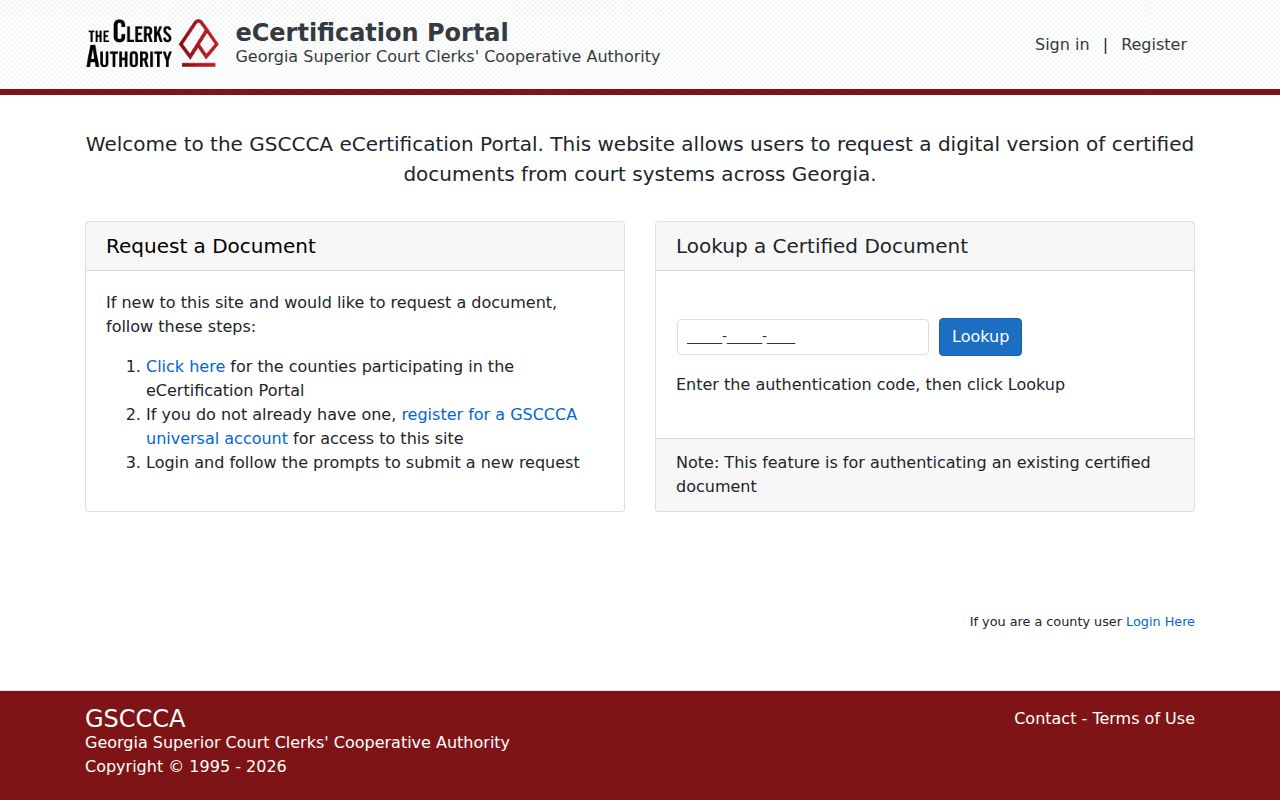
The portal handles the electronic request workflow. The Appling clerk remains the legal custodian of the court record.
Inside an Appling County Court Record
An Appling County case record blends identifying data, a time-ordered history, and public documents. Read the court name first, since identical names appear in different courts. Then confirm the case number, style, filing date, status, judge, case type, and parties. Event lines may point to a motion, order, notice, setting, trial, disposition, or appeal. Financial fields can show costs or payments. But a payment screen is not a full disposition record.
| Case number | The unique identifier assigned by the filing court; copy it exactly. |
|---|---|
| Case style | The caption naming the parties or the State and accused. |
| Docket history | Chronological filings, court actions, settings, and outcomes. |
| Filed documents | Public pleadings, notices, motions, orders, and judgments when images are available. |
| Current setting | Date, time, type, location, and status when recorded. |
| Disposition | The recorded way a charge or case ended; read the exact order. |
Words like pending, disposed, appealed, reopened, sealed, and transferred describe procedural status. They say nothing about guilt or facts.
Appling Copies and Screen Prints
A screen print is handy but not clerk-authenticated. A plain copy just reproduces the accessible document. A certified copy bears the clerk's authentication, and official recipients require it as proof the copy matches the filed record. The Appling clerk's electronic certification page points requesters to the online certification service.
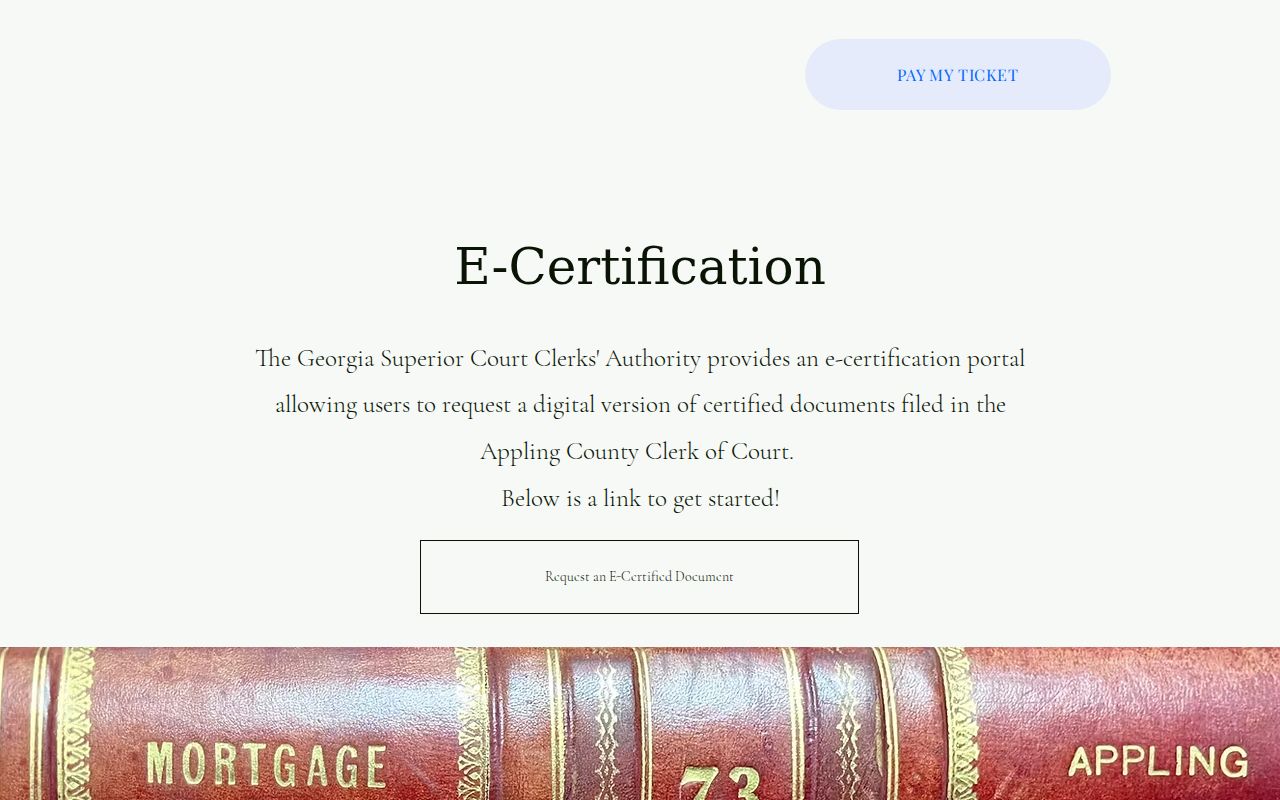
That local page bridges the Appling County clerk and the statewide digital certification process. For paper certified copies, ask the clerk whether counter or mail delivery works best.
Fees and Certified Copies
Appling County publishes its filing charges. It posts no plain-copy, certified-copy, or exemplification price, so ask the clerk directly. The $219 civil or divorce filing charge is not a copy fee. Certification charges vary by document and request channel. Get a written quote and confirm payment methods before mailing anything. PeachCourt document access also requires an account and a price review before purchase.
| Item | Published amount | Use |
|---|---|---|
| Plain court copy | Quote required | Ordinary reproduction |
| Certified court copy | Quote or portal calculation | Clerk-authenticated copy |
| Exemplified copy | Ask whether offered | Enhanced authentication if required |
| Civil or divorce filing | $219 | Starts a case, not a copy price |
| Sheriff service | $50 | Service when requested |
Appling County Clerk of Courts
69 Tippins Street, Suite 103
Baxley, GA 31513
Mail: P.O. Box 269, Baxley, GA 31515
(912) 367-8126
Weekdays, 8:00 a.m. to 5:00 p.m.
Mailing Appling Court Record Requests
A good mailed request narrows the clerk's search. List the court, case number, case style, approximate filing year, exact document title and date, copy type, quantity, delivery address, telephone number, and a cost limit. Call first for a quote and payment instructions. The clerk sets no fixed turnaround or identification rule, so confirm both before relying on a deadline.
Older Appling records: Ask whether advance retrieval is needed for a paper, archived, or legacy-system file before visiting the counter.
A fax number for the clerk is (912) 367-8180. Call before sending anything. Staff must confirm the office accepts faxed requests and how fees get paid. Phone staff can also walk you through the process. They may confirm a case number or a court date. Still, clerks never give legal advice.
Other Appling County courts keep their own files. Magistrate Court sits at 77 Tippins Street in Baxley, reachable at (912) 367-8117. Probate Court is at 36 South Main Street in Baxley. Its numbers are (912) 367-8114 or (912) 367-8115. A city case belongs with Baxley, Graham, or Surrency. The town sitting inside Appling County does not move it to the county clerk. Check the right destination before you mail originals or payment.
Sealed Records and Public Access
For open Appling County court records, follow the court's own rules. They cover access and copies. According to the Georgia Attorney General, the Superior, State, Probate, and Magistrate Courts fall outside the ordinary Georgia Open Records Act request process. The state open-records guidance covers O.C.G.A. §§ 50-18-70 through 72 for agency records. Treat it as a tool for agency files. It is not a way around the court that holds the docket.
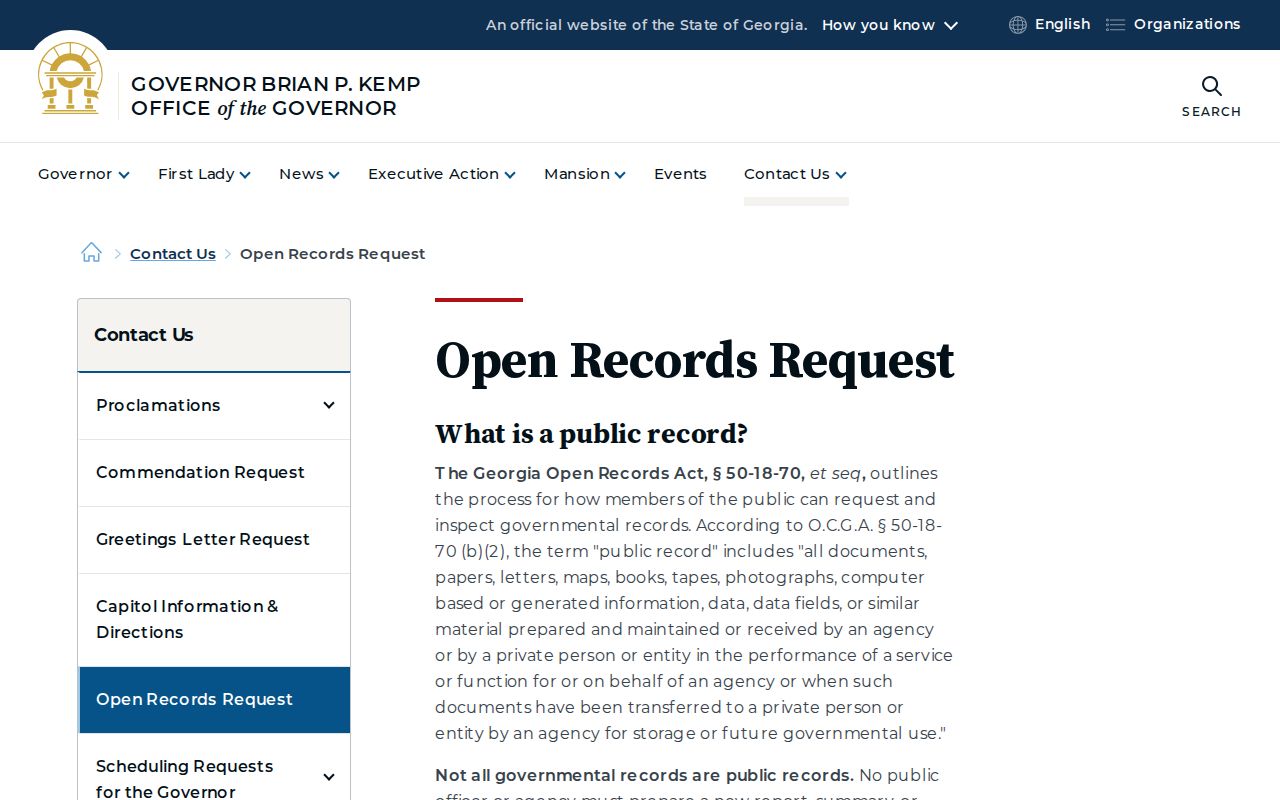
Agency versus court: the state guidance can help you tell an agency request apart from a request for an Appling court file.
Key access rules:
O.C.G.A. § 9-11-7.1 and court rules require protected identifiers to be redacted and provide procedures for sealed material.
O.C.G.A. § 15-11-704 generally limits inspection of juvenile files unless a statutory exception or court order applies.
Appling Juvenile Record Limits
Appling Juvenile Court takes part in eCertification. The system can deliver eligible certified documents, but that convenience is not public access. Most juvenile files stay restricted. A requester may need authorized status or a court order to see them. Sealed exhibits and unredacted filings stay off limits too. A public docket entry that names them does not change that. The Georgia legislative materials hold the source of the juvenile-record statute.
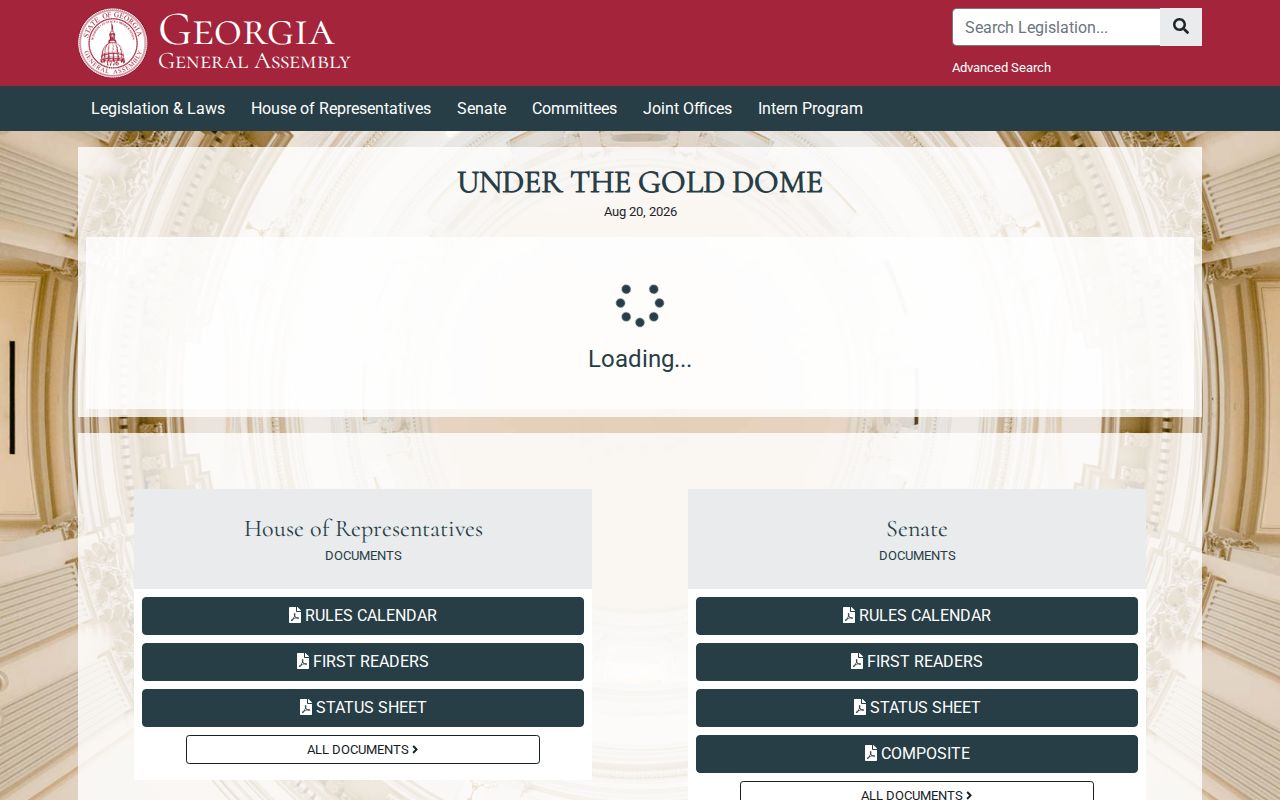
The statute makes the split clear. Portal coverage is one thing, permission to inspect is another. If a known case is missing, verify the court and case number with the custodian, and never try to work around sealed or restricted access.